
Traffic Court Records in Pawnee County
Traffic matters in Pawnee County land in County Court. That is the trial court level for traffic cases. Nebraska's county-court system treats traffic and municipal ordinance matters as County Court work. So begin any online docket search with Pawnee County and County Court selected, not District Court. The file itself can hold plenty. A traffic court file may include a case summary. It may also hold a register of actions, hearings, orders, financial entries, and document images where available. The Nebraska County Court overview lays out this traffic jurisdiction.
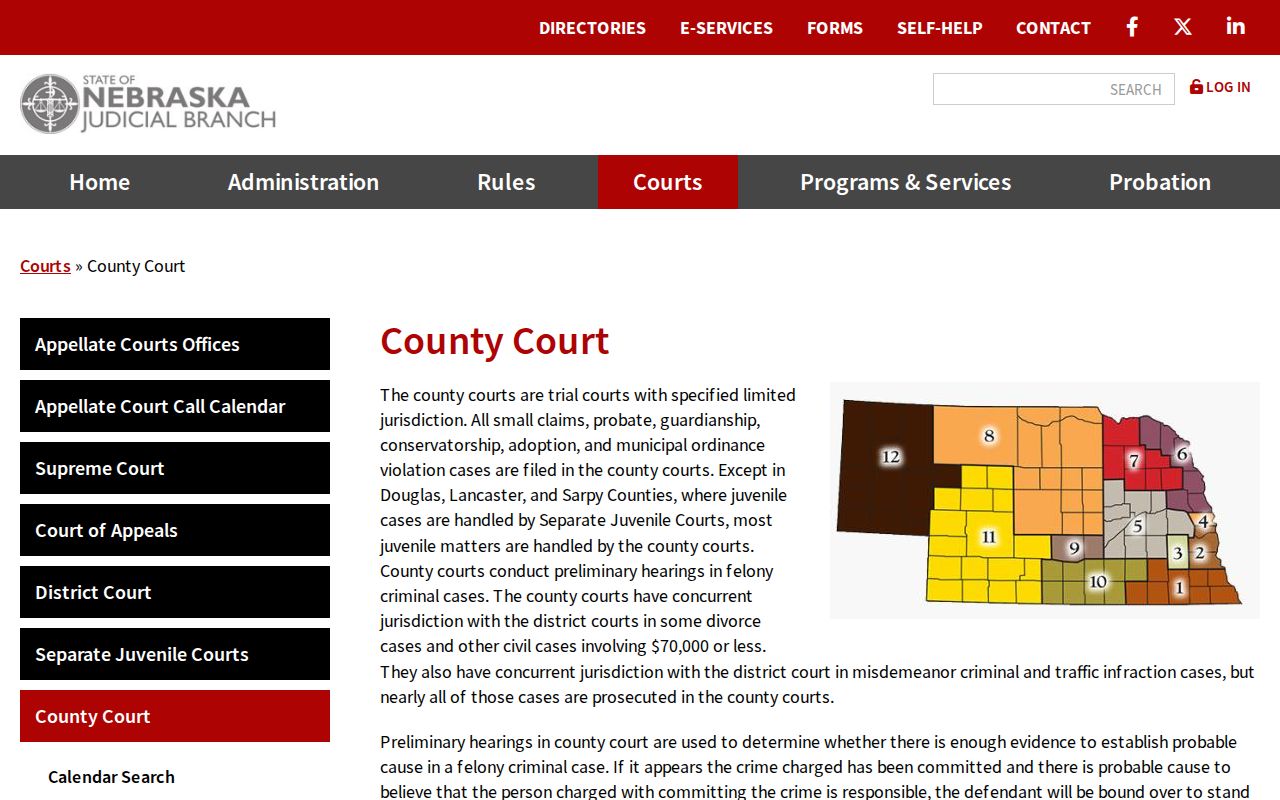
A court record is more than a payment screen. When the question is what happened in the case, read the register of actions next to any payment or status entry.
Pawnee Traffic Cases Start Here
Two pages point to the same place. The local Pawnee County Court page and the state Pawnee County Court directory both list County Court as the contact for traffic, misdemeanor, and municipal-ordinance matters. A city ordinance question may also need a call to the city clerk. The county court page describes only the state-court path for those violations. One more caution for JUSTICE. Do not type a town name as if it were a separate court-level filter. If the citation began in County Court, keep the court type set to County Court. Keep the county set to Pawnee. An event missing from the online docket may be posted, restricted, or found only through a different local record process. The clerk can confirm which.
How to Look Up a Traffic Ticket
Start online. Nebraska's statewide JUSTICE one-time search is the main channel for a Pawnee County traffic docket lookup. It isn't built for tickets alone. Enter a party name, then narrow things with Pawnee County, County Court, an approximate year, and a traffic case type if you know one. The tighter the filters, the cleaner the list. If the online result leaves you unsure, the courthouse public terminal, the County Court clerk by phone, and the clerk counter are still there as local options for checking the court record.
- Keep the citation or court papers available and identify any case number shown on them.
- Choose Individual or Entity and enter the party name, trying a last name alone if the fuller format fails.
- Select Pawnee County and County Court, then add the approximate filing year.
- Use a traffic-related case type or subtype only when it is known, then verify the county, court, and status in each result.
- Use the calendar separately for a current or future setting, and contact the clerk for a certified citation, judgment, or register.
One quirk worth knowing: a mismatched middle initial can make the search return nothing at all. So an empty result doesn't always mean no citation exists. A list result is not the full court file either. You may have a known citation number. If it hasn't shown up in the docket yet, ask the clerk to confirm it.
Pawnee Traffic Search Filters
The JUSTICE search screen gives you plenty of controls. They turn a broad statewide name search into a focused Pawnee County court docket search. County and Court Type do the heavy lifting. Those two settings route your query to the right court's records. Case Year, Case Type, and Case Subtype then trim a long results list down to something workable. Party type separates individuals from entities. Judge, attorney, sort-by, and sort-order options sit there too. They come in handy when you're pinning down one specific court file.
| JUSTICE field | Control | Pawnee traffic use |
|---|---|---|
| Party Name | Text | Start with the last name if a full name format is uncertain. |
| Individual / Entity | Radio choice | Choose the appropriate party type. |
| County | Multi-select | Select Pawnee County. |
| Court Type | Dropdown | Select County Court. |
| Case Year, Type, Subtype | Dropdown and multi-select | Use known approximate details to narrow results. |
A one-time search caps results at 30 records. Before you pay for case detail, double-check that the court and case information match the Pawnee County ticket you're after.
Finding Your Traffic Court Date
The Nebraska Multi-Court Case Calendar is the date tool. Choose County Court, select Pawnee, then search by date or by last name. A last-name search needs at least two characters. The calendar is designed for current and future settings, not a historical docket. Compare a result with the register of actions in JUSTICE when both are available.
| Citation or case identifier | The research does not publish a fixed Pawnee citation format. Use the exact identifier from court papers: exact citation or case number. |
|---|---|
| Court | Select Pawnee County Court for a traffic matter that begins in County Court. |
| Date and time | A current or future setting returned by the calendar; confirm a time-sensitive event with the clerk. |
| Calendar search mode | Search by Date or Search by Last Name. These are separate modes. |
| Status context | Read the case register for the fuller sequence of hearings, orders, payment entries, and later activity. |
Pawnee Traffic Calendar Limits
An empty calendar screen does not prove the hearing is gone. The Pawnee County court docket entry may have moved. It may not be published yet, or it may sit behind a restriction. The calendar itself says as much. So treat it as your tool for a scheduled event. Treat the register of actions as the record of what has already happened in the case. Need a continuance, a remote format, a time, or a room? Call the Pawnee County Court clerk at 402-852-2388. The office runs remote or as-needed staffing on Wednesdays. A quick call to confirm beats a wasted trip.
Paying or Contesting a Ticket
The County Court page links to the Nebraska Judicial Branch Internet Payment System. It handles waiver-eligible citations and certain other listed current matters. Check eligibility first. Paying is an administrative step, not the whole story. So the court case record is still where you read the register of actions, hearing details, judgment, costs, and anything filed later. If your citation does not show as payment-eligible, ask the court directly about the right way to respond.
| Payment route | Court-response route |
|---|---|
| Available only when the matter is identified as waiver-eligible through the court's payment process. | Use the court's instructions when payment eligibility is not shown or when a court response is needed. |
| Confirm the transaction and compare it with the case register. | Use JUSTICE and the calendar to locate the case and current setting, then confirm with the clerk. |
| A payment interface does not replace a certified copy or the full court file. | For a formal citation, judgment, or register copy, request it from the clerk. |
Time-sensitive confirmation: A calendar result can change and a no-result screen does not prove that no date is set. Before a response deadline or scheduled appearance, call the Pawnee County Court clerk at 402-852-2388 for timely confirmation.
Pawnee Traffic Payment Limits
A payable citation is only one slice of the court record. The statewide case-information description breaks a case into layers. These include a summary, the register of actions, financial entries, hearings, orders, and any available document images. A payment entry answers one narrow money question. It will not explain every earlier or later court action on its own. So read the current status alongside the date and exact wording of the entry that matters.
Note: The payment route and the calendar run separately from the record-search system. Each serves a different purpose in a Pawnee County court docket lookup.
Court Traffic Record vs Driver Record
Two different files sit behind a traffic case. The Pawnee County Court docket entry belongs to the court clerk, who keeps the register of actions for the citation's court case. Your driver record is a different animal entirely, held by the state licensing agency rather than the court. Neither one covers for the other. A public case lookup tells you what happened in court, while the licensing agency's own record process tracks the driving side, so check each file with the office that keeps it.
| Question | Court traffic record | Driver record |
|---|---|---|
| Custodian | Pawnee County Court Clerk Magistrate for the local court file. | Nebraska's state licensing agency for its separate state-held file. |
| Focus | Citation case, register of actions, hearings, orders, judgments, and copy requests. | The state licensing agency's separate file. |
| Access route | JUSTICE, courthouse terminal, or a request to the County Court clerk. | The licensing agency's official request process. |
Pawnee Traffic Status Terms
Status words on a Pawnee traffic docket carry precise meanings. A citation is simply the notice alleging a traffic or ordinance violation. "Waiver-eligible" signals that the court or payment system allows the stated procedure. You still need to confirm it applies. A continuance means the court date moved. When you see "judgment," that is the court's formal result. "Paid or satisfied" describes money, not the outcome itself. "Dismissed" means the case or charge ended. Read the stated reason and the entries that follow before drawing a conclusion.
- Register of actions
- The chronological list of filings, hearings, orders, and other court activity.
- Setting
- An upcoming scheduled court event, not a complete history of the case.
- Continuance
- A postponement or rescheduling shown through the calendar or case record.
- Certified copy
- A clerk-certified reproduction, different from a portal screen or ordinary image.
Read public entries narrowly. A payment appearing in the register does not fully explain the matter's final court status.
Fees and Copies
Access charges and copy fees are two separate things. For online viewing, Nebraska's e-services description lists a $17 one-time search that returns up to 30 results, three-day result viewing, and $2 general case-detail access. Copies work differently. CC 3:29 sets out the non-certified and certified options for a County Court copy. On the traffic side, the statewide filing and cost schedule varies by category and waiver status. Use the current official table rather than carrying forward an old local amount.
| Item | Amount | Record use |
|---|---|---|
| One-time JUSTICE search | $17 | Up to 30 results, viewable for three days. |
| General case detail | $2 | Open only after confirming the result is the right case. |
| Electronic non-certified copy | No charge | County Court CC 3:29 instruction. |
| Mailed non-certified copy | $0.25 per page | County Court CC 3:29 instruction. |
| Electronic certified copy | $1 per request | County Court CC 3:29 instruction. |
| Mailed certified copy | $1 seal plus $0.25 per page | County Court CC 3:29 instruction. |
Pawnee Traffic Copy Requests
To request a citation, judgment, or register, give the clerk the court, the case number if you know it, the case name, the exact document, its date, your delivery destination, and whether you want it certified or non-certified. CC 3:29 is the county-court file-copy request form. For a traffic case that starts in Pawnee County Court, the clerk can tell you which delivery and payment methods are accepted and whether the document you want is public. The Judicial Branch clerk-magistrate notice names the leadership of the records office that handles these Pawnee requests.
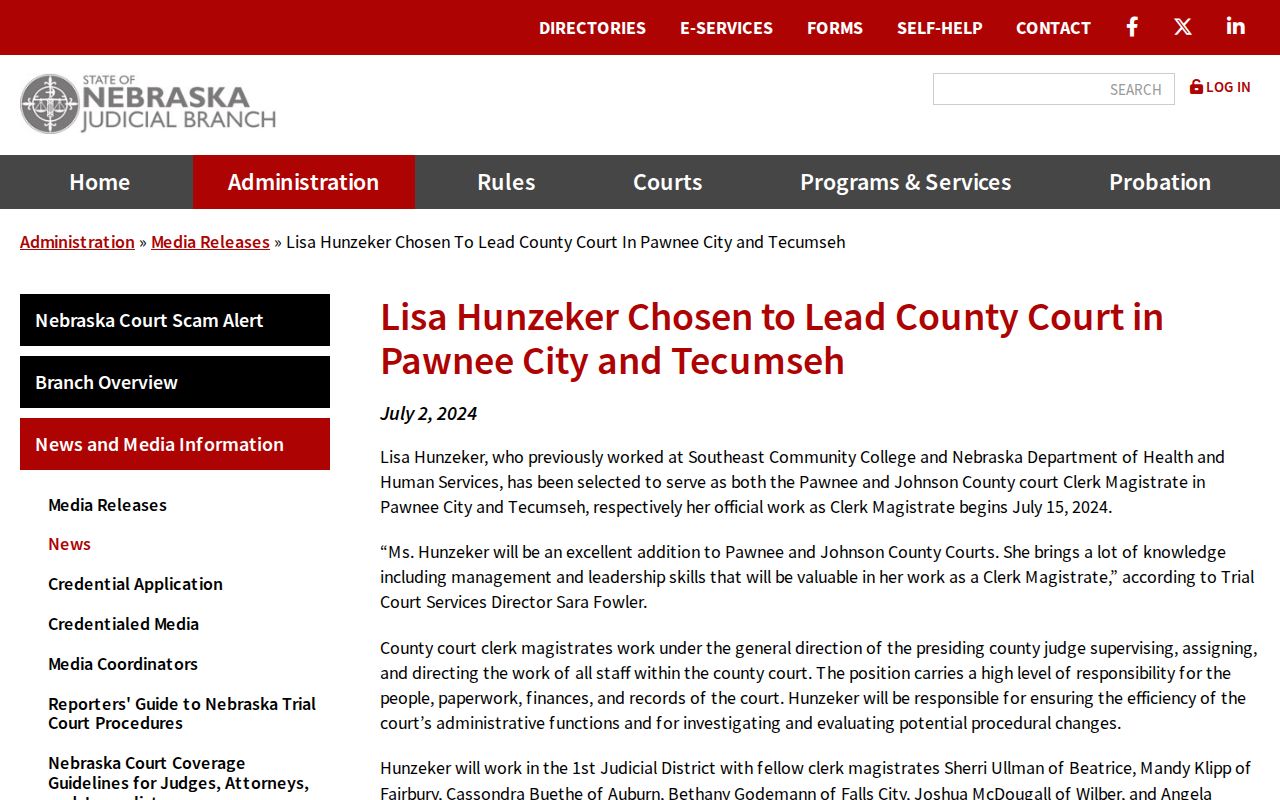
A public image or payment confirmation is not a certified court record. Ask for the exact document form your purpose requires, and confirm availability with the clerk.
Pawnee Traffic Image Access
A 2024 Judicial Branch announcement expanded one-time-search access to nonconfidential document images. It covers images filed on or after April 2008. That helps with electronic court material. It does not promise a public image for every citation-related item, though. Confidentiality rules, redaction, paper-only files, and retention limits still apply. The latest Judicial Branch caseload-report announcement offers aggregate court context, not individual citation research.
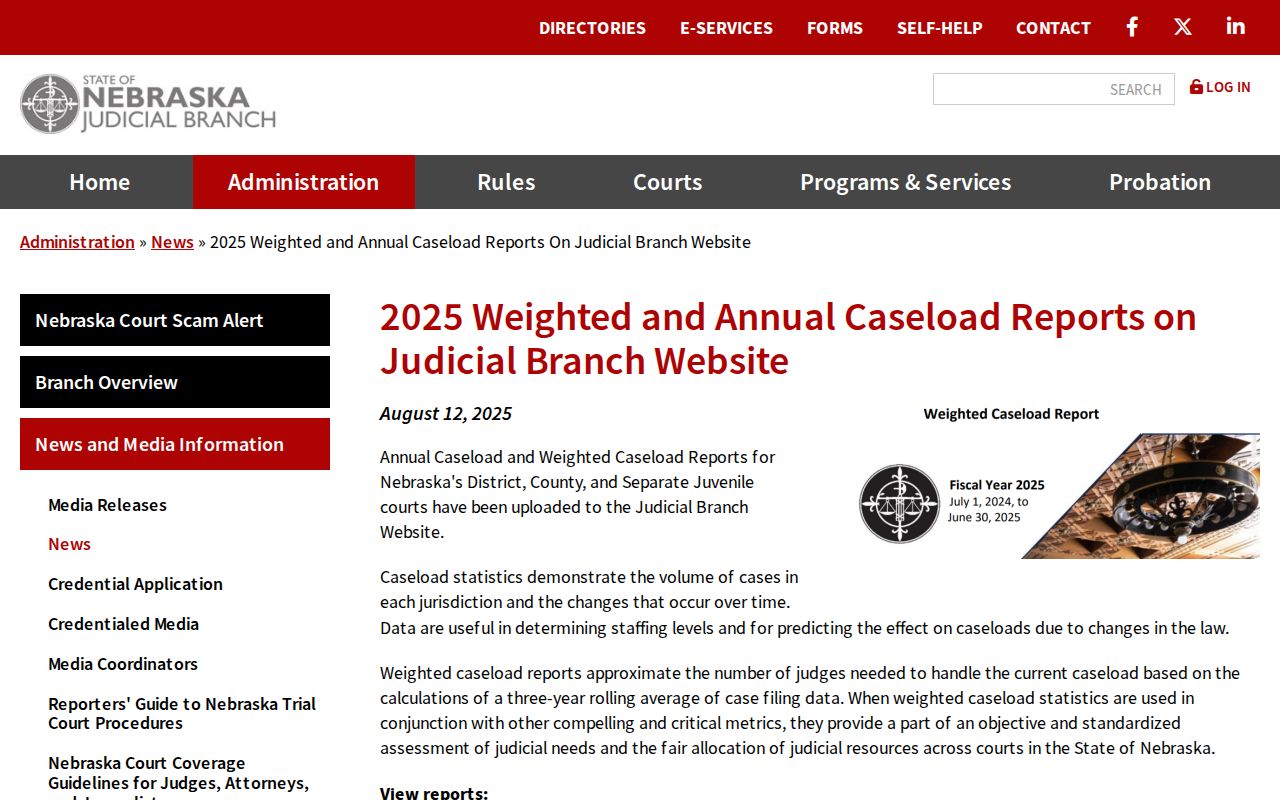
The FY2019 Pawnee County Court report counted 137 misdemeanor or ordinance traffic openings. That aggregate is history, not a list of current cases, and it identifies no citations or parties.